
On the MP Storytelling blog, I want to share weird stories I’ve been reading about in the news and memorable stories that have been rolling around in my head.
I call it the MP Storytelling Journal because it’s a chronicle of things, business and non-business related, about stories that are worthwhile sharing.
In this post, I’ll cover a NY Times article called, “Sleepless in Seattle as a Hellcat Roars Through the Streets.”
Also, I’ll talk about my favorite movie of the year so far, I Saw the TV Glow, and why it’s an underrated film I loved.

Are you looking for help writing or creating a great story for yourself or a small business? Get in touch with me at MP Storytelling and book a call through the link below.
Subscribe to the MP Storytelling blog
Let’s get into it!
The Hellcat
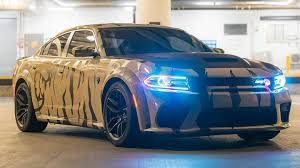
The most interesting news story I read last week was about a modified Dodge Charger that’s been wreaking havoc on the downtown streets of Seattle.
How exactly? The noise. Backfires from the exhaust and accelerating through the streets in the middle of the night leaves buildings shaking and hundreds of noise complaints. People are irritated, fed up, and sometimes terrified of the noise. When idling, it was measured at 84 decibels, the equivalent of a diesel train. Entire neighborhoods are apparently fed up with this guy. No one’s happy when they’re not getting enough sleep.
On Instagram, the driver is an influencer. He goes by the handle @srt.miles. His name is Miles Hudson, he’s 20 years old and has over 750K followers. For as many people who hate him in the local Seattle area, he most likely has just as many fans who love him on Instagram.
All he has to do really is ride the car around town to attract attention online and offline. There’s a post of him riding over to Starbucks, another topping 100 mph getting boba tea. In the NYT article, they have body cam footage of a cop after getting pulled over. The officer asks him why he doesn’t go to the local speedway with his car. He tells Miles that he’s driven in faster cars than this. Miles then flashes his phone, saying something like I want to drive in Downtown, and should be allowed to because I have over 700K followers and turned it into a career.
After two warnings, the cops gave him a fine for modifying the noise on his exhaust. They charged him with two counts of reckless driving, and the Department of Construction and Inspection has ordered him to modify the vehicle or face a fine of up to $1,300 per day. Now the city attorney has filed a civil complaint for a court order to force Miles to modify his car and face thousands of dollars in penalties.
In more recent IG posts, he refers to himself as an Arkham Knight, referencing Batman and the famed Arkham Asylum.
Subscribe to the MP Storytelling blog
Storytelling in Public Spaces
Mr. Hudson has embraced the villain-like characterization the city has given him. He likes that story because his fans like that narrative. With the Hellcat, he found essentially an unenforceable loophole in the law (at least for the time being), something subversive that allows his followers to vicariously live through his freedom.
His fans escape from the routine and regiment of their lives through the awesome roar of the Hellcat tearing up the streets of Seattle.
A resident interviewed for the article who asked IG to take down his account said he has “committed crimes.” If he had committed crimes though, wouldn’t he be in jail? Mr. Hudson said to the Seattle Times, “There are way bigger issues than a black man with a nice car who makes noise occasionally.” That is true. If it were a young white guy, would people have the same reaction?
Now don’t get me wrong. I know I would be fed up if I couldn’t get sleep because of someone joyriding all night. People have a right to be upset. Residents of Seattle’s downtown see a completely different story. Miles is disrespectful, and as his driving escapades have continued, has soured into citywide hatred. I imagine what many people hate about it is that it’s completely preventable.
Public spaces in cities are extremely regulated. There are designated spaces and rules for everything. In the modern world, we expect things to be labeled or designated with a list of things we can and cannot do in certain spaces. This includes of course how much noise people can make while driving on city streets. Although I’m sure no city official in Seattle thought that it might be a problem they’d have to try and enforce.
Using his following to justify driving a car around at night that disturbs thousands of people to a cop is this twilight zone moment where reality meets fiction. When does a creator’s persona online, especially an influencer, cross a boundary and become harmful to their city or the people around them?
Seattle’s downtown, it says in the article, has been plagued by street crime and homelessness since the pandemic. Miles Hudson to them is a microcosm of the city’s dysfunctional leadership, and their inability to take action when needed.
We all know the city of Seattle, if it sets out to make an example of Mr. Hudson, will most certainly succeed. When city leaders have residents united behind an issue, let alone against one person, it becomes a priority they have to take action on. In this case, laws they have to figure out how to enforce.
Social media in our culture continues to flex its power and its increasing economic clout in the fabric of society though. Miles Hudson’s influencer story affirms that.
To read the full NYT article if you have a subscription.
Subscribe to the MP Storytelling blog
The Best Underrated Film of 2024
Jennifer and I like to go to the movies, and we’ve seen a lot of really good movies this year. Hollywood has been putting out great films all year from Dune 2 (streaming on Max), Lisa Frankenstein (streaming on Peacock), to Challengers.
My favorite film of the year so far is I Saw the TV Glow, a movie that reminded me of watching some of David Lynch’s best films. The film is a coming of age story about a black boy named Owen growing up in suburbia who’s introduced by an older classmate, Maddy to the tv show, The Pink Opaque. He becomes obsessed with the show. He sneaks over to Maddy’s house for a sleepover to watch it one night because he can’t watch it at home. His parents say its past his bedtime.
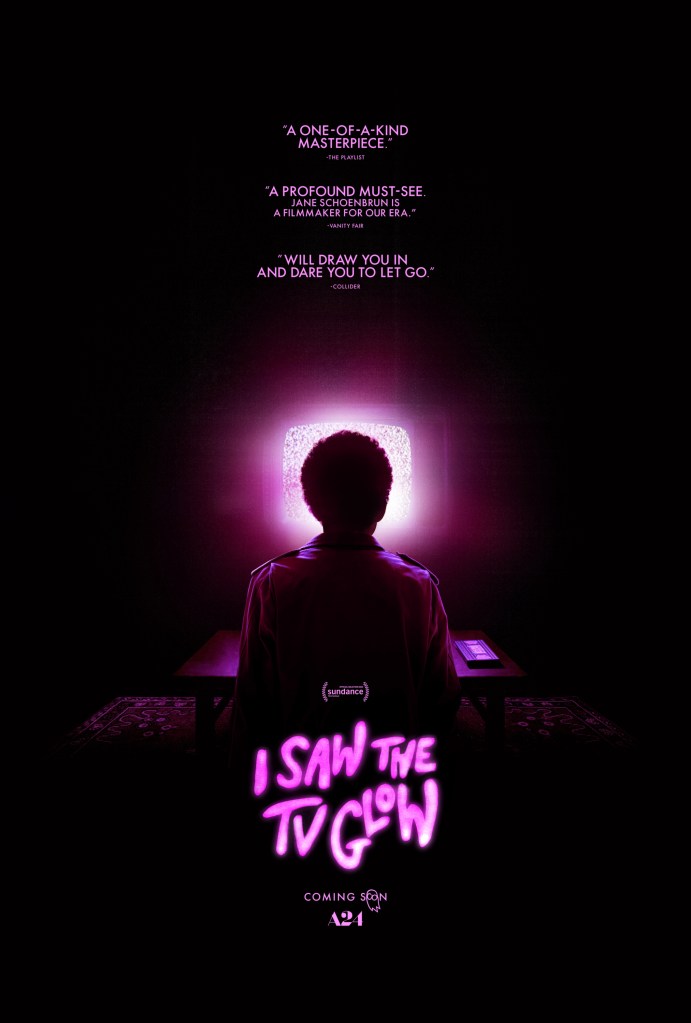
Maddy then starts giving him VHS recordings of every episode at school because she can’t host sleepovers anymore. Then, she disappears and years later returns saying she’s been living in the world of The Pink Opaque, and tells Owen that if he buries himself, he will be transported into the world of the show.
He doesn’t go, and decides to keep living life in a small town, inheriting his parents house when his father dies, working at the local movie theater for years, and then a family fun center after that closes.
The plot of the film, like any David Lynch film, is secondary to the set pieces and the raw emotion of the acting. It’s about the characters’ obsession with mediating their existence through screens and a television show. It’s about feeling alienated, ostracized, different in a world that Owen and Maddy will never fit into.
Subscribe to the MP Storytelling blog
Telling Great Stories thru Aesthetic and Ambiguity
The New Yorker titled their review of this movie, “I Saw the TV Glow is a profound vision of the trans experience.” The director Jane Schoenbrun it says in the article is a trans, nonbinary individual. Owen’s persona is moody and depressed. Maddy is a more prickly, rebellious character, but still carries around the same melancholy vibe. They struggle to survive in a world dominated by a white cis-male American culture.
Schoenbrun makes sure though to never say what her movie is explicitly about.
The intentional vagueness of the film’s setting, and what the character’s don’t say about themselves leaves the door open for the film to comment on multiple topics. Maddy and Owen’s home life are both filled with menacing paternal figures that brings up issues of domestic child abuse. A scene at the end of the film with Owen working at the family fun center, screaming at a white birthday party represents the black racial trauma of living in a suburbia where almost everyone else is white.
The film always comes back to issues of identity and the mediation of their life through screens, through a tv show that can express or connect with their emotions better than other people. Maddy is an androgynous character, who after disappearing, talks about her journey traveling West and feeling so out of place working at a Build-a-Bear workshop in Tucson. Owen walks in on one of his white coworkers getting a blowjob at work, and is terrified by the spectacle. Later, his coworkers say the woman is interested in him, and encourages him to sleep with her. He sits there in stunned silence during this moment of peer pressure bullying. The possibility of suicide, going six feet under to enter the TV show or an imagined scene in the family fun center bathroom, is always hovering around the film.
What makes them happy, gives them purpose is understanding and analyzing The Pink Opaque, a knock-off of the 90s hit show Buffy the Vampire Slayer. This gives Owen and Maddy a way to connect, that leads to a deeper friendship, each understanding how they’ll never be able to fit in.
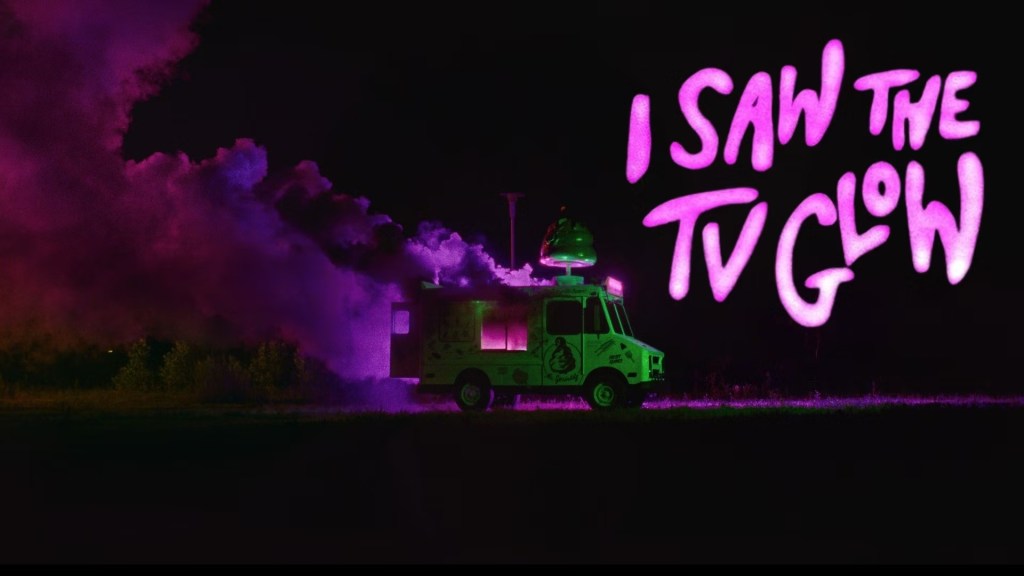
The set pieces of the film celebrate the character’s moods, and their struggles with stark originality. The vibrancy of Schoenbrun’s image remind me so much of sets and color in films like Mulholland Dr., Wild at Heart, and Blue Velvet. The ability to know when to add color, to go to silence, to play the right song for what the character’s are feeling, is done with a precision that enhances the refracted, splintered nature of their alienated experience.
It starts with the film’s title that fills the whole screen, glowing in neon. There is the incredible set piece of an ice cream truck at night in the middle of a suburban street, glowing in vibrant, bright colors surrounded by smoke. Or the monologue of Owen’s friend underneath a kids’ play parachute as the camera zooms out against a projected image of star constellations, telling the story of her life since disappearing from town.
Some songs from the film are played live by bands at a local bar, a reference to both Buffy the Vampire Slayer, and the nightly hang-out in Twin Peaks. The songs hit so well at the right time, carrying the mood of the characters with us through the story.
Justice Smith as Owen deserves an Oscar (I doubt he’ll even get a nomination). He’s been an excellent actor for some time. I enjoyed him in Dungeons and Dragons, and I think he really showed his range, digging deep into the soul of Owen for a spectacular performance.
Most of all, I think the story is about how connected we are virtually, but how lonely we are in reality. People don’t see each other in person as much as they used to. People have less friends, spending more time mediating their experience, living vicariously or feeling connected to characters on TV shows, YouTubers and influencers.
Our lives are increasingly filtered through experiences with technology, and now AI. How do we experience life in a way that feels genuinely us? I think this movie asks us to pursue our dreams, celebrate our differences, or we end up feeling resentful in the utilitarian malaise of suburban America feeling and looking like everybody else.
Read Richard Brody’s great review of this film in The New Yorker.
Subscribe to the MP Storytelling blog
Wrap-up
In this post, I’ve talked about how a social media influencer is clashing with city officials in Seattle. I also talk about my favorite movie of the year so far, I Saw the TV Glow.
Miles Hudson’s Dodge Charger called the Hellcat has disturbed thousands of people in Downtown Seattle. When stopped by the cops though, he says he needs his vehicle for professional purposes as an influencer entertaining fans on IG. I’m interested to see where this story goes.
Update: As soon as I finished writing this, the city has now slapped Mr. Hudson with an 83K fine. Ouch!
I loved I Saw the TV Glow. Original films are so hard to make these days, and this one is truly incredible. Watching stories that make us think, that make us want to continue the conversation is what art’s all about.
After all, a passion for telling great stories is why I started my business MP Storytelling. If you’re looking to tell a great story, or want to talk about writing for your website or social media, get in touch with me today.
Thanks for reading! Till next time.
Subscribe to the MP Storytelling blog
 MP Storytelling LLC
Leave a comment