
Sharing about ourselves online is frightening, maybe terrifying even. A lot of people instantly go to worst case scenario thoughts where a post somehow goes viral, and there’s all this negativity and judgment in the comments, and then people are talking about it in real life! Oh no!
It’s healthy to have fear about social media, especially because engagement, whether positive or negative, creates more visibility on almost every social platform.
But that doesn’t mean we shouldn’t share. The best time to start sharing is right now! Why? Well, we’ll get to that in a bit. First, let’s start with . . .
Why do people not share?
A big reason people don’t share is because they don’t have time. Many busy professionals are parents, and even though the average American has about 5 hours of leisure time a day, a lot of that will be taken up with childcare duties.
Not a lot of people put sharing on social media high on their priority list.
Another is reason is that people don’t share because they don’t care. A lot of professionals don’t fill out their LinkedIn bios or post about their work because they believe it’s not a good use of their time. Many people might think, ‘How is that really going to help me make more money or get a promotion?’
Another big reason people aren’t sharing right now is because of our political climate. For instance, in my LinkedIn feed are people who have been laid off or fired by the government, people upset about tariffs. There are museum administrators and researchers speaking out about their loss of funding. But almost 1 in 2 people in the US voted for the President. I imagine there’s a lot of conservative LinkedIn users who aren’t like, “Let me share about my professional accomplishments” when so many people are either posting about losing their jobs on a weekly basis or are extremely upset about what’s happening in the government.
So, if there’s all these reasons why people don’t share, then . . .
What’s the point of sharing?

If you already believe social media is a waste of time, or are fearful of judgment and negativity, then the glass is already half empty.
You’ve already given yourself reasons not to share, and you can’t have any impact if you don’t share. The numbers are always going to stay at zero.
Sharing on social media though gives you self-empowerment, the opportunity to tell your own story with agency. Now you are in the driver’s seat, and can share more about what you want to highlight, what you find insightful or impactful rather than a company, a school, an organization telling their version of a story while you come along for the ride.
Why is right now the best time to start sharing?
Because social media platforms will only become more saturated with content, and even though it’s hard to believe, we’re still at the beginnings of this digital social media, AI age. There’s not as much content out there as you think. The potential to connect is way bigger than you think.
For instance, here on LinkedIn only 1% of users are weekly creators. That means 99% of the people here on LinkedIn never post.
There’s opportunity for your content, for your professional self to be seen and shared. And the algorithm is going to do the hard work for you of finding the right people to put it in front of. If you use social media in the right way, it can be a force for good that expands your impact and engages a community that loves the work you do.
What makes sharing powerful?
And if you do start sharing, two things I’ve found that make sharing on social platforms really powerful is the confidence you gain in yourself by posting, and the meaningful, impactful way you can speak to someone 1-on-1.
For example, I’ve noticed a lot of talking head videos on LinkedIn use a ton of visuals, cuts, there’s a lot of flash to them, but not a lot of substance that people can absorb easily. Most people are too scared to talk, bring insight, just share themselves and their opinion for an entire video because they don’t think it will be engaging enough for people. They don’t have the confidence or self-belief to know that what they’re saying is valuable, even if it doesn’t get the views or likes they’re hoping for.
Practice makes perfect, and the more you share on a platform like LinkedIn, the more confidence you will gain in sharing about yourself, and the more confident you will be in sharing your insights and opinions.
A lot of flash, a lot of cuts, a lot of graphics in a short video are generally turn-offs. There’s too much going on and people swipe away. What people want is someone with personality who they like and feel familiar with, as if they’re having a good conversation over a coffee or drink. This is when you really start connecting with people.
Share, build connections, and create opportunities
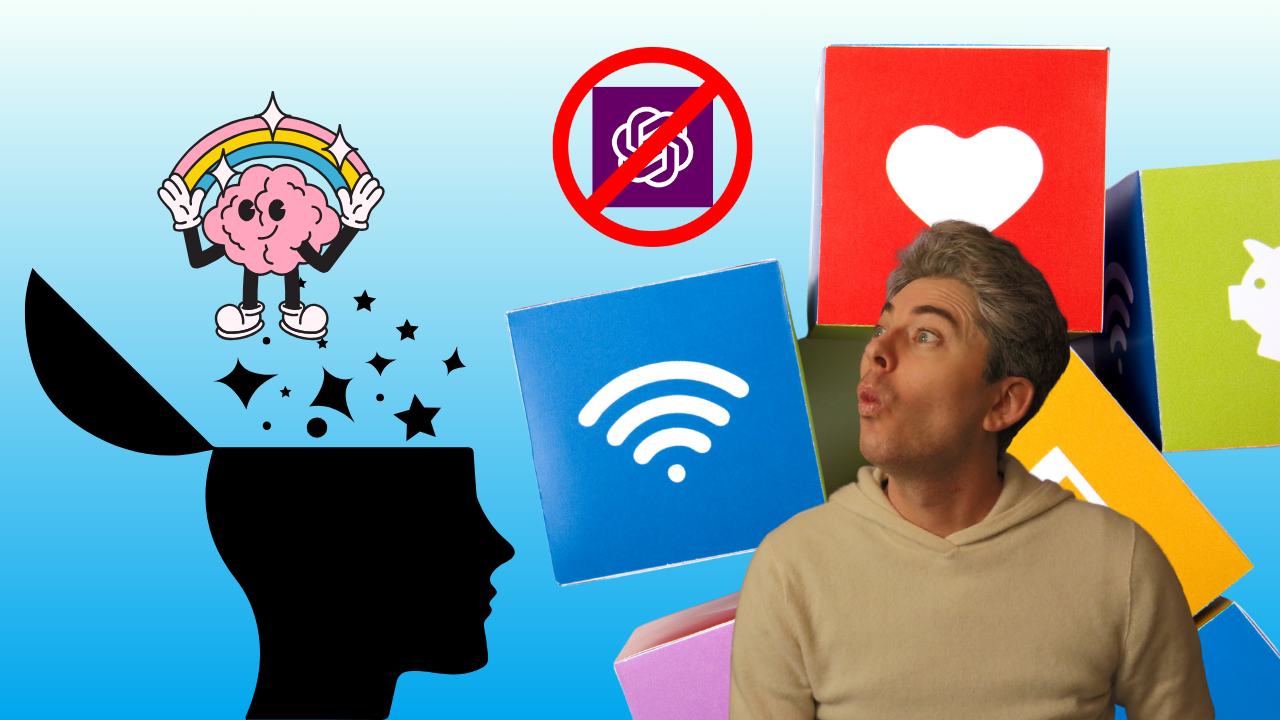
Is ChatGPT doing everything for you? Well, that’s a problem.
First, because it’s terrible for the environment and second, because you’re not using imagination and creativity to create original content that connects with people.
Explore how you can share and create opportunities on LinkedIn, and how MP Storytelling can help you.
 MP Storytelling LLC
Leave a comment